

Understanding Bowen Family Systems Theory
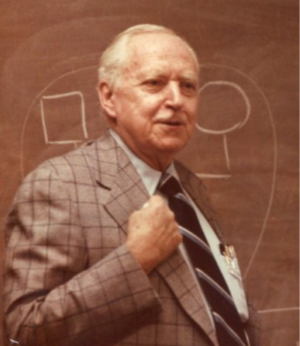
About Murray Bowen
Murray Bowen, 1913 – 1990, was a psychiatrist who researched human behaviour in relationships and developed a theory about the common patterns found in all emotional systems and how these patterns are transmitted across generations.
Bowen observed that as individuals react to tension in relationships, predictable patterns of behaviour developed as a way of adapting and managing the dilemma. Rather than becoming overwhelmed by the emotional reactivity and defaulting to patterns that may be unhelpful or undermine our own or someone else’s functioning in the relationship, it is a challenge in all relationships to learn how to hold onto our thinking selves while at the same time remaining connected to significant others.
An Introduction to the Theory
Bowen Family Systems Theory in a Nutshell
At its core, Bowen Family Systems Theory proposes that problems and symptoms do not reside within an individual alone, nor even within a single relationship such as parent and child. Instead, they belong to the entire family emotional system, functioning much like a single organism.
Through extensive research, Bowen observed that even intense dyadic relationships (for example, between a mother and child) are always embedded in wider family interactions. Each family member is responding to others, forming emotional triangles that together shape how anxiety circulates and where symptoms become “stuck.” In this way, symptoms are maintained by the emotional functioning of the whole system, not by one person’s behaviour or intent.
What Makes Bowen Theory Different?
While many family systems approaches share a focus on the family as more than the sum of its individuals, Bowen Theory stands apart in a key way. It is grounded in biology, physiology, and natural systems, rather than primarily in cognition or intention.
Other systemic models may interpret a child’s symptom as serving a purposeful function for the family (for example, unconsciously attempting to reunite parents). Bowen Theory, by contrast, suggests that symptoms arise and persist because anxiety and instinctive emotional responses are being regulated through the family system, not because anyone is trying to achieve a particular outcome.
This grounding in natural processes means Bowen observed similar emotional patterns not only in families, but across species.
Implications for Practice in High-Stress and Child Protection Contexts
Bowen Theory is not a set of techniques or an intervention model. Instead, it offers a large conceptual framework that helps practitioners make sense of complexity. While this can feel challenging at first, Dr Brown notes that a good theory is profoundly practical.
For practitioners working with families in crisis, Bowen Theory helps:
Identify repeating interactional patterns
Reduce blaming, judging, or over-fixing
Avoid unintentionally escalating family anxiety
Maintain greater objectivity and neutrality
By understanding how families are adapting to stress, workers are less likely to become caught in emotional reactivity or to contribute to dependency through over-helping. This clarity supports more sustainable engagement with challenging families.
Benefits for Families and Children
A central principle of Bowen Theory is that change in one part of the system can influence the whole. When even one family member learns to manage their emotional reactivity more effectively and act from clearer principles, the entire family system can begin to function better.
For children, this is particularly significant. When parents gain insight into their own emotional patterns and move beyond self-blame, they are more able to respond thoughtfully rather than reactively. This shift creates greater emotional space for children and supports healthier development.
Challenges in Using Bowen Theory
One of the biggest challenges for practitioners is that half the work lies in managing their own anxiety and emotional sensitivity. Bowen Theory places strong emphasis on the worker’s capacity to:
Stay out of triangles
Avoid side-taking
Resist over-functioning or rescuing
Maintain a non-reactive, thoughtful stance
This approach not only supports families’ capacity to grow, but also helps protect practitioners from burnout.
Learning and Applying the Theory
Dr Brown emphasises that while reading Bowen’s original writings is valuable, the most effective learning comes through practice and observation. Practitioners are encouraged to adopt a research mindset by:
Asking detailed, interactional questions (who did what, how others responded, what happened next)
Tracking patterns over time rather than focusing on blame or opinions
Observing distancing, over-involvement, and emotional reactivity within families
These types of questions also help practitioners stay out of triangles by focusing on what is happening, rather than who is at fault. Formal training, supervision, and applying the theory to one’s own family relationships further deepen understanding and effectiveness.
A Theory for Sustainable Change
Bowen Family Systems Theory offers a powerful lens for understanding families under pressure. By shifting attention from fixing individuals to observing emotional patterns, it supports more thoughtful practice, greater resilience in workers, and meaningful change for families over time.